

Before the Breakdown
What machines, communities, and volunteer organizations teach us about listening as leadership

Leadership Means Listening
Lately, I’ve been writing about murals, memory, and what it means to belong to a place. This time, I want to zoom in on a quieter part of public life - something you won’t find on a wall, but does shape the quality of our neighborhoods: how we lead, how we listen, and how we care.
I’ve spent the last two decades in and around nonprofit systems: sometimes as a board member, sometimes as a fundraiser, sometimes as the one cleaning up the mess after someone burned out. From sororities to refugee resettlement programs, foreign exchange support to city-adjacent projects, I’ve seen the inner workings of a lot of “helpful” organizations. And while the missions vary, the pattern is often the same: the people doing the holding are un/underpaid, overstretched, and un/undersupported.
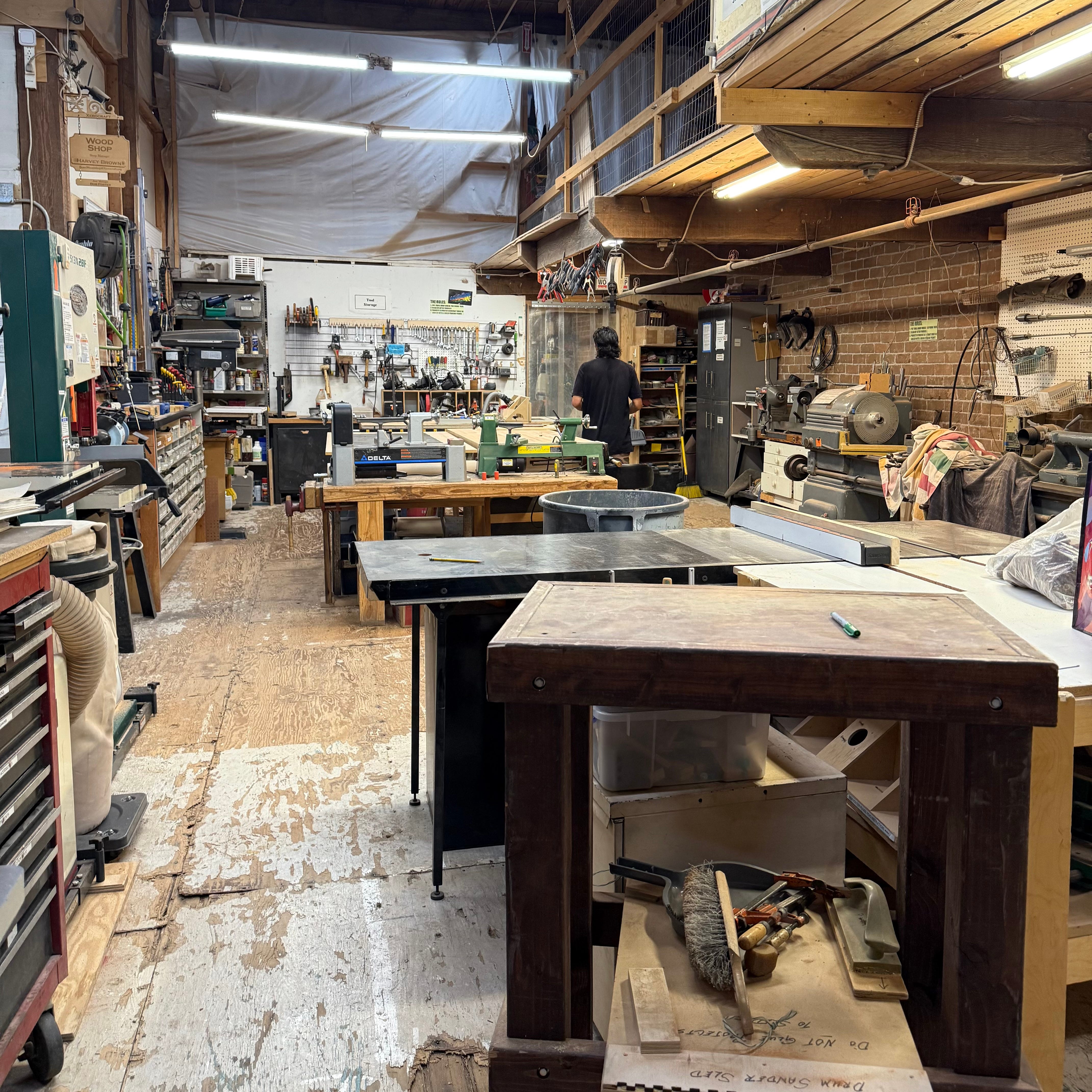
I came to Xerocraft, Tucson’s downtown makerspace, specifically to try something different; to see what would happen if I applied a more relational, listening-based approach to leadership. I had a lot of philosophies about running solid organizations, and I didn’t want to be off spouting theories I hadn’t tested. So I stepped in. I put my money where my mouth was… except, you know, without the money. Years in, it’s still teaching me a lot. And if anything, it’s proving that leadership is definitely not about control - it’s about tracking tone, energy, and trust. In short: listening.

Tending to the Temperature
Some people treat leadership like running a machine: focus on output, keep things moving, tighten the bolts when things get loose. But even machines break down if they overheat. And the people who run them best aren’t just following a manual—they’re listening. They know how the machine sounds when it’s running smooth, and they know when something’s off before it seizes.
Volunteer organizations aren’t machines, but they run on similar feedback. When things start grinding—when people get tense, go quiet, lash out, or disappear—it’s not a personal failure. It’s a signal. That’s the moment to pause and ask: where’s the friction coming from? What patterns are repeating? Who’s carrying too much without support?
Friction isn’t always a problem. It can spark insight, creativity, movement. But if it builds up unchecked, it burns people out. It erodes trust. It makes the work undoable.
Leadership doesn’t just mean getting things done—it means noticing when the system needs cooling down, tuning up, or tending to before it breaks.
Listening Isn’t Passive
There’s this myth that “listening” means being neutral or quiet. But that’s not the kind of listening that keeps organizations alive. Listening here means tracking tone, behavior, and participation over time. Noticing when people who used to be dependable are now late to meetings, when the room goes still after someone speaks, and when the same issues surface in three unrelated conversations.
Listening is also taking action when needed: not waiting for perfect evidence before acknowledging a pattern. Often, by the time someone raises their hand to say something’s wrong, it’s been wrong for a long while.
Challenges? Yeah. Sometimes leadership means making a call before the group agrees, in the face of backlash, and sometimes without the benefit of clean data.
Because if the organization is overheating, someone has to take the temperature seriously. Someone has to act.
The Cost of Inaction
Most volunteer-run groups operate without formal HR departments or professional training in conflict resolution. That’s part of their beauty and part of the risk. Without a culture of listening, unresolved tensions turn into factions, power hoarding, silent exits, explosive meetings and emotional whiplash. Some people think that’s just the nature of grassroots work. But it’s not. That’s the nature of neglected systems.
Organizations that last are the ones that take care of themselves like living beings. They build cultures where people feel safe bringing concerns forward. They can be confident that those concerns won’t be met with silence or shame. A solid organization is one where decision-makers listen early, act deliberately, and stay accountable when things go sideways.
Saying No
One of the hardest things about leading in community is that we’re often trained to equate kindness with saying yes. To be open, to be generous, to make space for people. But real listening doesn’t mean agreeing with everything. It means being willing to name when something, or someone, is out of alignment with the health of the group.
That often means saying no.
And here’s where it gets tricky: in groups that value equity, accessibility, or community care, saying no can look and feel like gatekeeping. Sometimes people will accuse you of exactly that. But there's a difference between exclusion rooted in fear or ego, and boundaries rooted in care.
A well-placed no can protect the health of an entire ecosystem.
It can say: this behavior isn’t working here.
It can say: we don’t have capacity to hold this right now.
It can say: we’ve listened, and we’ve made a decision.
And that decision might piss someone off. They might lash out, call it unfair, say you’re abusing your power. And if the only thing backing your decision is your ego, they might be right. But if the decision is backed by a body of listening, a track record of care, and a culture of collaboration—then it stands.
Saying no isn’t about shutting people out. It’s about keeping the door open to the kind of culture you’re trying to build.
Building Culture, Not Just Projects
In the end, every organization is more than its to-do list. It’s a culture, a melody, a pattern of interaction.
And leadership - when done with depth - means listening to that pattern, tending to it and acting before things boil over. Not out of the need for control, but out of an abundance of care.
This kind of listening, the kind that builds culture, isn’t limited to nonprofits. It’s what makes good neighbors. It’s what holds communities together when resources are tight. And in a desert city that runs on creativity, collaboration, and grit, it might just be the most vital art form we have.
I’d love to hear your stories, too. Have you been part of a group—formal or informal—where things broke down (or held together) because of how leadership showed up? What does “listening” look like in the spaces you care about? If you’ve got thoughts, anecdotes, or lessons learned, feel free to reply, comment, or just sit with it and drop me a line later.