I met Pato Aguilar back in 2021 when I spotted one of his paintings at a local gallery. We became fast friends, and I’ve loved watching his work evolve over the years. He’s stayed true to his themes—rooted in culture, memory, and place—while pushing his visual language further and further. His color palettes are instantly recognizable: vibrant, otherworldly, and full of meaning. They always stop me mid-scroll. Or mid-drive.
Pato paints what matters to him, and he does the research to back it up. He doesn’t shy away from political or cultural themes—and frankly, I think that’s what public art should do. But too often, cities and institutions want the aesthetic of art without the ideas. They want color, not confrontation. That’s why I think this mural matters.
Let’s not forget Diego Rivera’s Detroit Industry Murals, painted in the middle of the Great Depression. A Mexican Marxist depicting American factory workers in the heart of the Motor City? That was a bold move—funded by the Ford family, no less. The mural stirred controversy then and still sparks conversation today. It’s a reminder that powerful art doesn’t happen by accident. It happens when people in charge say yes, even when the content might challenge the status quo.
The University of Arizona’s School of Journalism gave Pato the go-ahead to make something real. And he delivered.


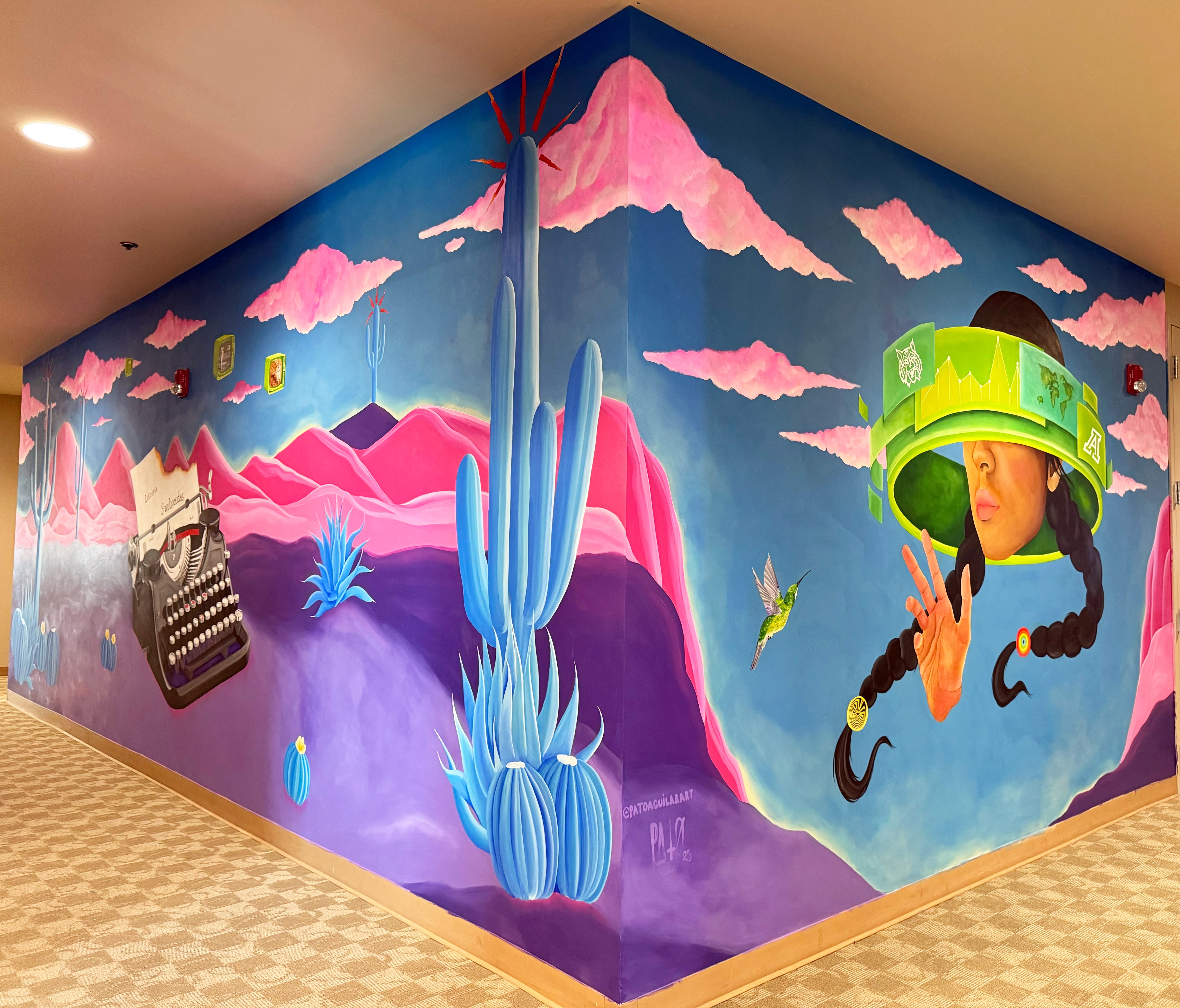
The mural, splashed across a long hallway inside the school, pulses with saturated pinks, purples, and blues. Barrel cacti glow in neon hues. Saguaros double as antennas, broadcasting symbols in electric bolts and glowing icons. One holds a vintage camera. Old-school televisions float across the sky, showing scenes from the moon landing and a mission to Mars.
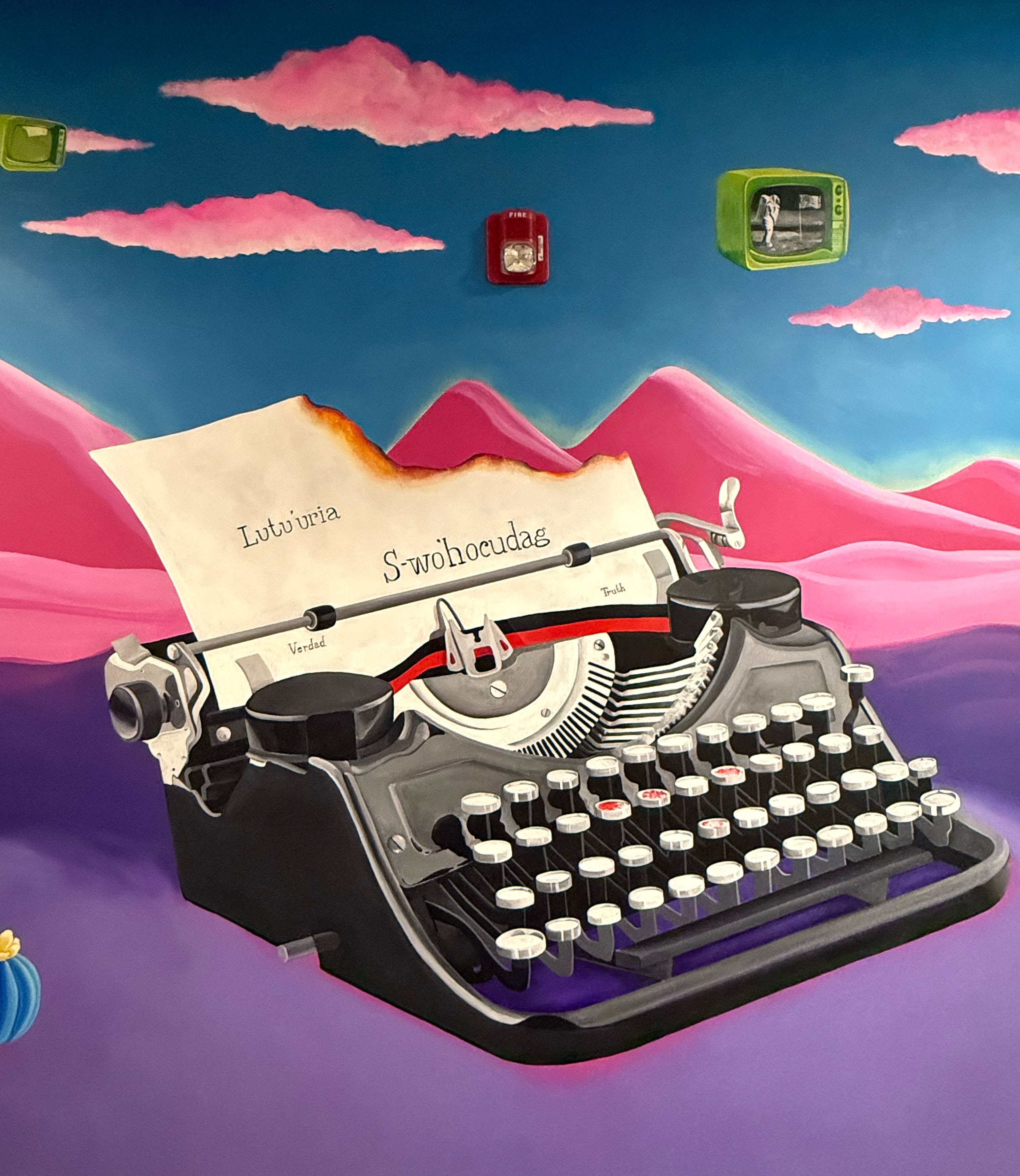
In the center of the piece is a striking black typewriter. A scorched piece of paper emerges from its rollers, bearing a powerful message in four languages:
S-wohocudag (O’odham)
Lutu’uria (Yaqui)
Verdad (Spanish)
Truth (English)
These aren’t just translations. They’re reminders of whose truths get told—and whose get erased.
Blood stains mark the typewriter’s keys—specifically those that spell “truth.” But look closer at the letter strikes and you’ll see “LOVE.” Above the spools, a quiet desert vignette: a saguaro silhouetted on a hill, printed in gray on black.
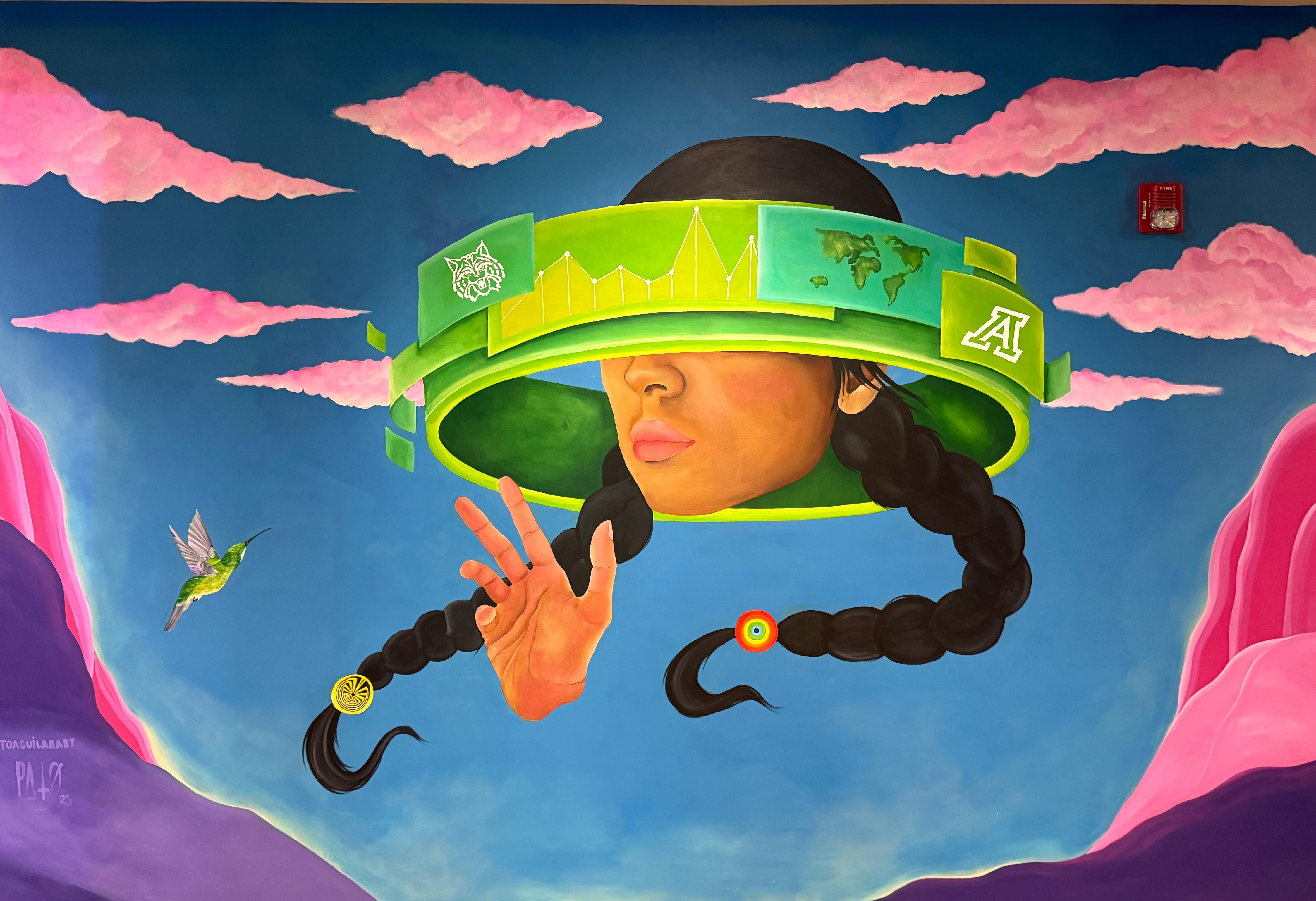
Pato’s visual language is deeply rooted. His murals often feature braids, hands, hummingbirds, and references to O’odham and Yaqui culture. This one includes a floating head—braided and poised—wrapped in a green visor of data, maps, graphs, and university logos. The Man in the Maze ties off the end of one braid, threading tradition into the future.


I saw the early mock-up before he started painting, and I was already excited. But the finished mural is more layered and detailed than I expected. Honestly, it deserves a wall outdoors, where the whole city can see it.
And that brings me back to my original point: municipalities need to be brave. If cities want to support the arts, they have to support artists with a point of view. Political art isn’t a threat—it’s a pulse check. It tells us who we are and where we’re headed.
Tucson, are you listening?
Check out more of Pato Aguilar’s work on instagram: @patoaguilarart