


Cities communicate long before anyone speaks. Murals, signs, sculptures, and the visual field of daily life form a landscape that quietly shapes how a place feels, what it remembers, and what it chooses to show. These images function much like a diet: taken in continuously, often unconsciously, but influential in ways that accumulate over time.
This idea, visual nutrition, offers a way to understand public art not as decoration, but as part of a city’s overall health. Just as a balanced diet supports the body, a balanced visual environment supports cultural memory, emotional resonance, and a sense of belonging.
A Nutritional Metaphor for the Urban Landscape
Using the metaphor of food helps clarify the different roles public art can play. These categories aren’t value judgments—they describe how murals function in the wider ecosystem of a city.
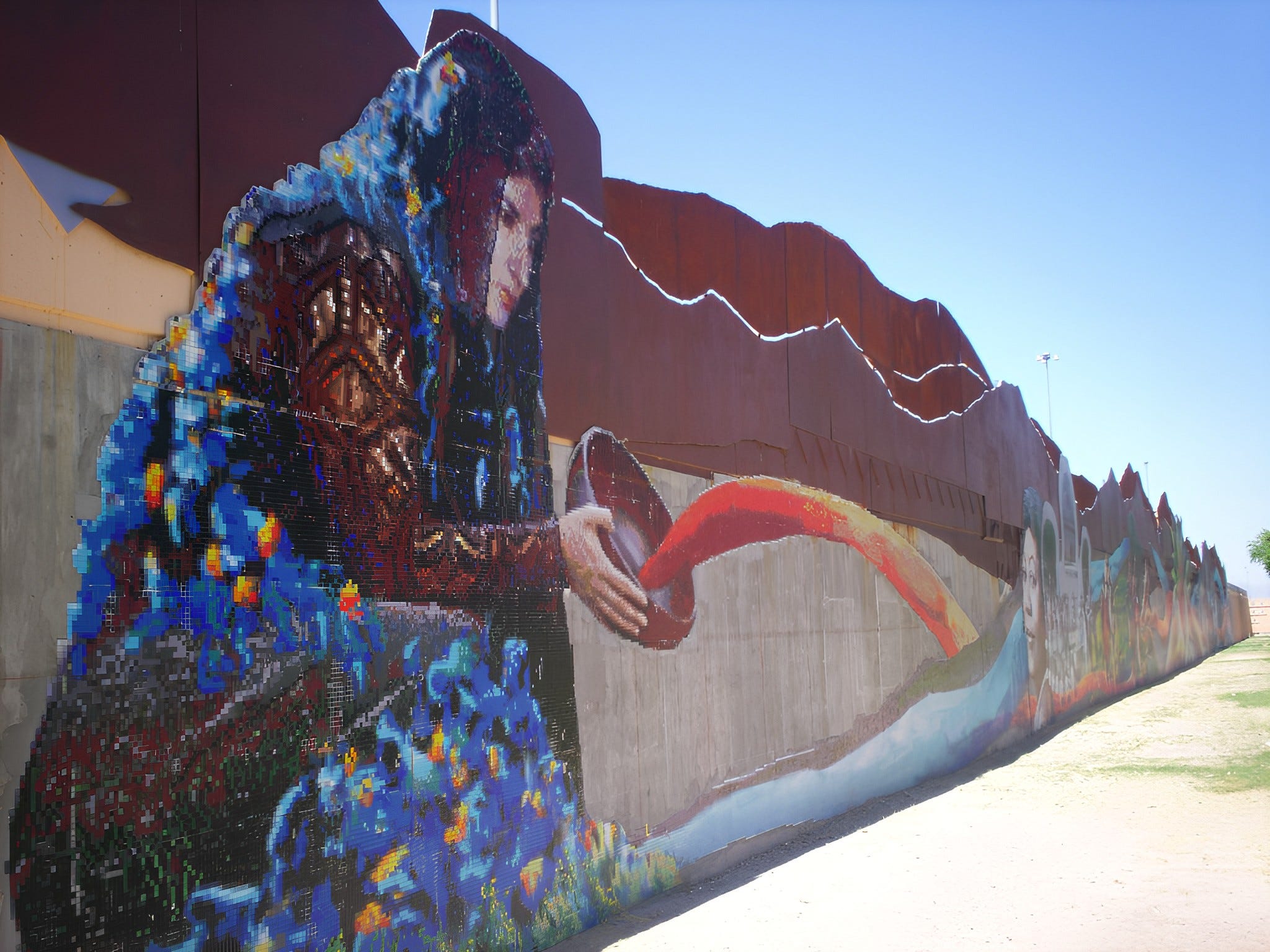
Fresh Fruits
Real nutrition: Vitamins, quick energy, bright flavors that wake the senses.
Visual equivalent: Murals that bring immediate delight—bold color, playful imagery, and accessible joy. They energize the streetscape, offering a burst of lightness in the daily visual diet.
Grains
Real nutrition: Long-lasting carbohydrates; stable, foundational energy.
Visual equivalent: Place-setting landscapes, neighborhood markers, and familiar visual cues. These murals ground the viewer—forming the city’s visual backbone and giving it a sense of steadiness.
Desert Roots
Real nutrition: Deep minerals and slow-digesting starches pulled from the oldest parts of the land.
Visual equivalent: Murals rooted in Indigenous cosmologies, cultural memory, and land-based identity. They carry continuity, depth, and the stories that keep a place connected to its origins.
Hearty Beans
Real nutrition: Protein, fiber, gut health—sustained nourishment with high staying power.
Visual equivalent: Works dense with narrative: political murals, community histories, portraits of struggle and resilience. These pieces strengthen the visual landscape by adding long-term meaning and substance.
Bitter Herbs
Real nutrition: Digestive support and detoxification; foods that bring clarity through their sharpness.
Visual equivalent: Art that interrupts complacency. These murals surface difficult truths, confront erasure, or challenge dominant narratives. They clear stagnation and sharpen collective awareness.
Ferments
Real nutrition: Probiotics, acidity, and transformative depth—foods that improve with time.
Visual equivalent: Experimental or surreal works that don’t reveal themselves immediately. As the city changes, these murals take on new layers, supporting cultural “gut health” through curiosity and complexity.
Empty Calories
Real nutrition: Quick energy with no minerals or fiber—pleasing but fleeting.
Visual equivalent: Decorative or corporate murals designed to fill visual space without offering meaning or memory. They look polished but contribute little to the cultural diet.
No single category defines a healthy landscape. A city composed entirely of light, whimsical imagery can feel ungrounded. A city filled only with heavy narrative becomes overwhelming. Balance—not uniformity—is what nourishes the public imagination.
The Skyline as a Garden
Thinking in terms of nutrition naturally leads to the idea of stewardship. Much like gardeners tending a field, the people who create, commission, and maintain public art shape the city’s diet. Their choices determine what grows where, what takes root, and what becomes dominant.
A skyline built around a single aesthetic—no matter how skillful—resembles a monoculture. It may be recognizable, even striking, but it lacks resilience. In contrast, a landscape shaped by many voices and grounded in different traditions creates a richer and more sustainable visual environment. Diversity here isn’t decorative: it’s structural.
Why This Framework Matters
Public art is never neutral. Even when a mural avoids explicit commentary, it still communicates values, priorities, and histories. A nutritional approach helps make that influence legible without relying on technical language or insider vocabulary. It reframes the conversation into something more useful:
What role does this piece play in the wider landscape?
What does it add to the city’s overall “diet”?
What kinds of nourishment are abundant—and what’s missing?
How does this mural support memory, belonging, or critique?
Where are the imbalances across neighborhoods?
Patterns become clearer through this lens. So do absences. Some districts may receive only sweet, surface-level imagery; others may bear the full weight of historical narrative. Noticing these dynamics shifts attention from individual walls to the collective impact of many walls seen together.
Toward a Healthier Visual Environment
A well-nourished city does not depend on a single style or message. Its strength comes from variety—images that acknowledge history, celebrate identity, spark joy, and invite reflection.
The visual nutrition framework simply offers a way to understand and articulate that variety, to recognize when something is flourishing or when something is missing.
Public art feeds the spirit of a place.
Visual nutrition helps us pay attention to what we are collectively consuming.
Find out more about the mosaic…
